| INDEX | 1300-1599 | 1600s | 1700s | 1800s | 1900s | CROSS-ERA | ETHNO | |
| MISCELLANY | CONTACT | SEARCH | 
|
|
|
Part 2: The pattern
For enlarging, read this page.
Please don't cut yet! Just enlarge and transfer the pattern onto paper.
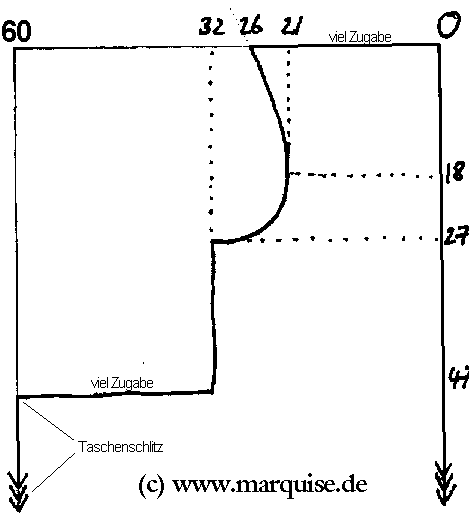
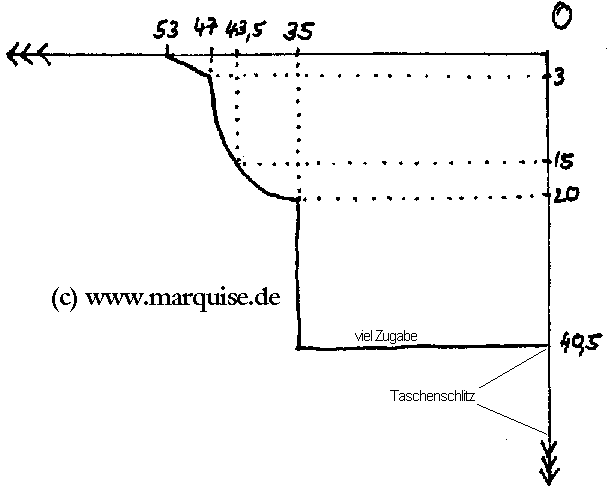
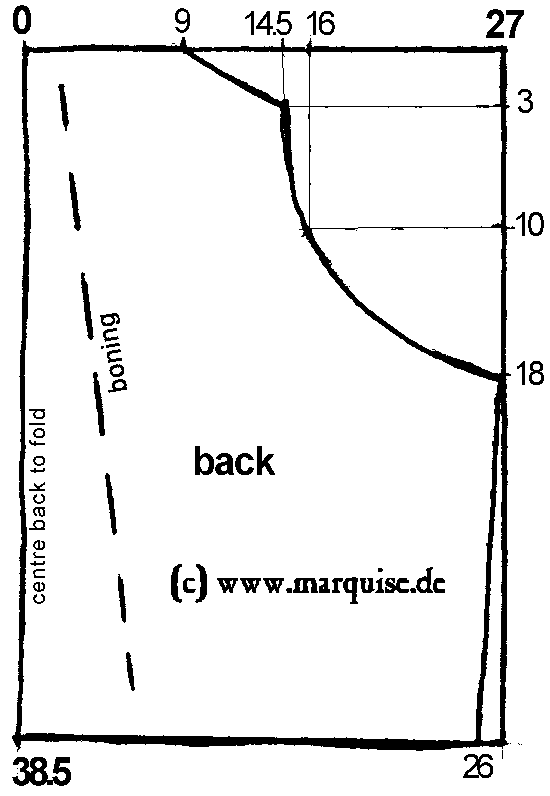
The pattern here is for a 1750s/60s robe, chosen for its simplicity. With minor changes, it can also be used for 1730-50 (see Variations page). The robe should be worn over pocket hoops as was customary this late in the century. There's another page on making paniers.
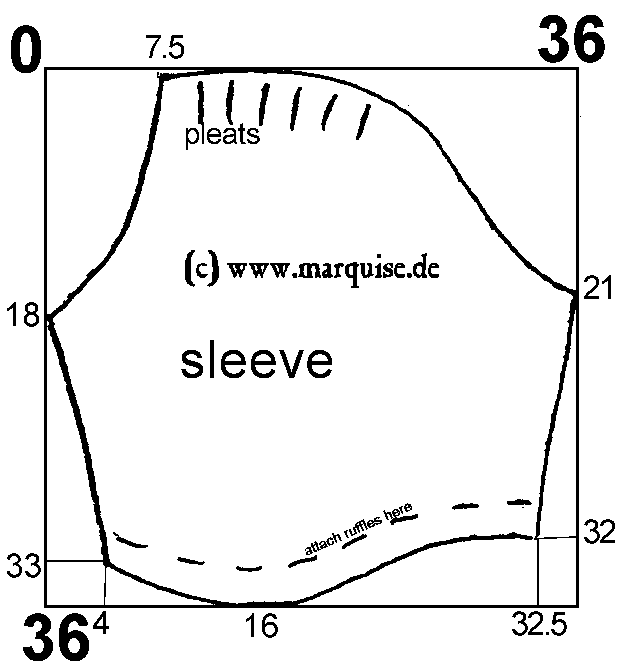
All measurements are in centimetres. Where it says "viel Zugabe" in the pattern, add a lot of allowance. "Taschenschlitz" means pocket slit. The skirt parts must be extended to the desired skirt length, which of course depends on your height and the size of the hoops. This pattern fits a person of about 160-165 cm height and 75-90 cm waist width. With the dress being open in front, one size fits more - adjust the stomacher, pleats and a bit of the side seams. The measurements given are not too accurate anyway - be prepared to do some fitting. Speaking of the stomacher: That piece is missing here. It's easy to make it yourself - see page 6 of these instructions.
In case you're wondering how one pattern can fit with a waist width variation of 15 cm, that's exactly why I consider the française relatively easy to make. It's because of the pleats: You make them deeper for a smaller size, shallower for a larger one. Therefore it doesn't really matter if you don't replicate the pattern exactly. When I make a française I tend to adjust the pattern to the fabric width available.
For example, in the pattern above the back is about 50-70 cm wide from centre back to side seam, plus 35 cm for the skirt part. That's 85-105 cm. So if the fabric was 90 cm wide, I'd go for the 50+35 cm. If it was 100 cm wide, I'd make the back 70 wide and the skirt 40, simply by adding a rectangular strip to either end of the pattern. A 150 cm wide fabric isn't wide enough to accomodate the two back parts, so I'd make both back and skirt even wider until they add up to 120 cm or more, and use the rest for trimmings.
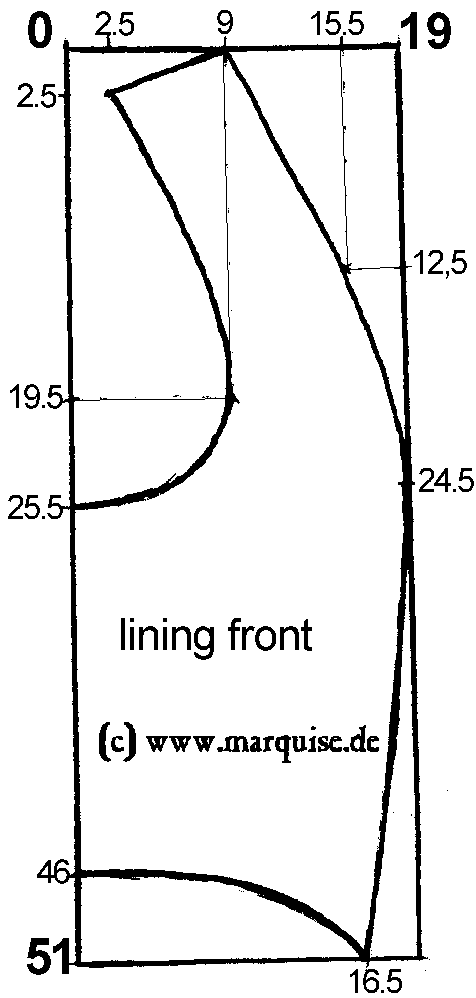
Admittedly, the lining doesn't fit all those sizes - that's the one thing you'll have to carefully adjust to your own size. Which is why a dummy is so important. Consider it your initiation into the wonderful world of draping. Once you have a lining pattern that fits really well, you can re-use it for all kinds of garments worn over stays: Anglaises, Poloniases, Caracos or Mantuas. All the more reason to spend some effort on it, right?
Once you've understood the principle of the pattern, you can even adjust it for different panier sizes and styles. See page 8.
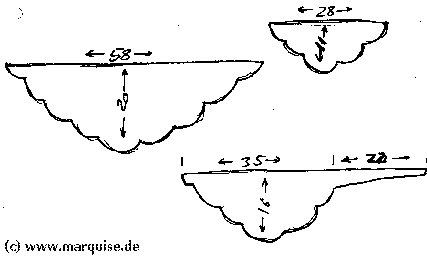
The vertical lines in the pattern are on the straight of grain. Stripe patterns are vertical. In the 18th century, patterns usually ran around the arm, but patterns running down the arm are fairly frequent, too. Same goes for sleeve flounces. For pleated strips and skirt flounces, the pattern runs across.
Next step: The lining
Content, layout and images of this page
and any sub-page of the domains marquise.de, contouche.de,
lumieres.de, manteau.de and costumebase.org are copyright (c) 1997-2022 by Alexa Bender. All rights
reserved. See Copyright Page.

GDPO


This work is licensed under a Creative Commons License.